
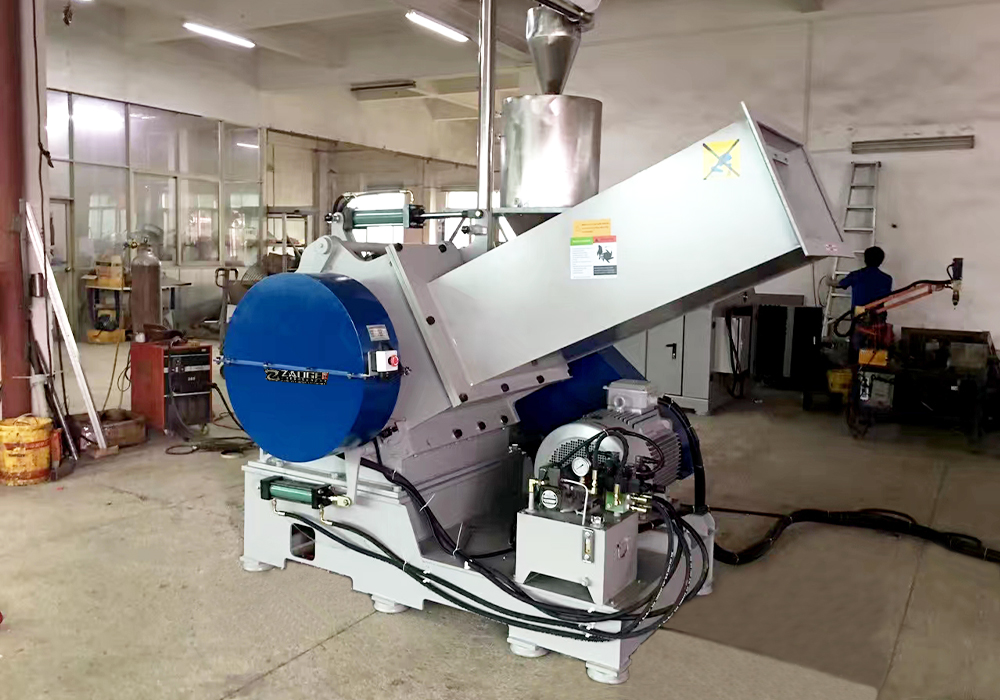
In the ever-evolving landscape of industrial automation, temperature control remains a critical factor that influences product quality, energy efficiency, and operational safety. Temperature controllers play a pivotal role in various manufacturing processes, especially in industries involving plastics and rubber, where precise temperature regulation is essential. This article delves into the different types of temperature controllers available today, highlighting their applications and benefits. Additionally, we introduce Dongguan ZAOGE Intelligent Technology Co., Ltd., a key player committed to advancing automation equipment for the rubber and plastic industries through innovation and quality.
### Understanding Temperature Controllers
Temperature controllers are devices or systems designed to regulate the temperature of a process or environment to a set point. They achieve this by receiving input from temperature sensors and adjusting heating or cooling mechanisms accordingly. Effective temperature control ensures consistent product quality, prevents energy wastage, and safeguards equipment from damage due to overheating or cooling.
### Types of Temperature Controllers
1. **On/Off Temperature Controllers**
The simplest form of temperature control, on/off controllers, operate by switching the heating or cooling elements fully on or off once the temperature crosses a predefined set point. When the temperature falls below the set point, the heater turns on, and when the temperature rises above it, the heater turns off. Despite their simplicity, on/off controllers are highly effective for processes that can tolerate slight temperature fluctuations.
*Applications:* Basic plastic drying processes, hopper heaters, and other instances where the cost of equipment simplicity outweighs precision needs.
2. **Proportional Temperature Controllers (P-Controllers)**
Proportional controllers improve on the basic on/off type by varying the output power in proportion to the difference between the set point and actual temperature (error). This method reduces temperature overshoot and provides more stable control by adjusting heating power gradually rather than abruptly switching it off or on.
*Applications:* Processes requiring better temperature stability, such as extrusion heating zones in plastic manufacturing.
3. **Proportional-Integral (PI) Controllers**
PI controllers combine proportional control with integral action. The integral component accounts for past temperature errors, gradually eliminating any residual offset that the proportional control alone cannot fully correct. This type delivers improved accuracy over P-controllers and is common in processes with slow response times.
*Applications:* Plastic granulator cooling systems, injection molding temperature zones where stable temperature control is critical.
4. **Proportional-Integral-Derivative (PID) Controllers**
Adding the derivative component to the PI controller yields the PID controller, one of the most precise and widely used temperature control methods. PID controllers anticipate future errors based on the rate of temperature change, allowing for preemptive adjustments that minimize overshoot and enhance stability.
*Applications:* High-performance plastic and rubber processing lines requiring stringent temperature control, such as extrusion, molding, and drying equipment.
5. **Digital Temperature Controllers**
Modern digital controllers integrate advanced microprocessor capabilities, allowing for complex control algorithms, programmable set points, alarm functions, and communication interfaces. These controllers often include touchscreen displays and support remote monitoring and control, making them invaluable in automated production environments.
*Applications:* Automated environmental protection equipment in rubber and plastics, including integrated systems with shredders, granulators, and vacuum feeders.
6. **Thermostats**
Thermostats are basic temperature controllers often embedded within machines to maintain a predefined temperature range. While less sophisticated, they remain useful in smaller-scale operations and as safety backups.
*Applications:* Equipment standbys and emergency cutoff circuits within plastic dryers or shredders.
### The Role of Temperature Controllers in Plastic and Rubber Automation Equipment
Temperature controllers are vital in ensuring the efficiency and effectiveness of plastic shredders, granulators, dryers, and vacuum feeders. Precise temperature management prevents material degradation, optimizes cycle times, and safeguards machinery operation. Improper temperature control can lead to product inconsistency, energy inefficiency, and increased wear-and-tear on equipment.
### Company Spotlight: Dongguan ZAOGE Intelligent Technology Co., Ltd.
Dongguan ZAOGE Intelligent Technology Co., Ltd. has established itself as a leading manufacturer specializing in high-quality automation equipment for the rubber and plastic industries. Focused on research, development, production, and sales, ZAOGE produces state-of-the-art plastic shredders, plastic granulators, plastic dryers, and vacuum feeders designed to meet the evolving demands of environmentally conscious manufacturing.
ZAOGE emphasizes integration of advanced control technologies, including sophisticated temperature control systems, to ensure equipment performance aligns with international standards. Their commitment to innovation supports sustainable manufacturing by improving material recycling, energy conservation, and process automation.
Through continuous investment in R&D and a customer-centric approach, ZAOGE’s automation solutions help manufacturers achieve superior operational efficiency and product quality, making them a trusted partner in the plastics and rubber sectors worldwide.
### Conclusion
Temperature controllers are indispensable components within the plastic and rubber manufacturing industries. From basic on/off types to advanced digital PID controllers, selecting the appropriate controller depends on the specific temperature tolerance, precision requirements, and process dynamics. As the industry moves towards smarter and greener manufacturing, companies like Dongguan ZAOGE Intelligent Technology Co., Ltd. play a crucial role by providing cutting-edge automation equipment that incorporates reliable temperature control technologies.
By leveraging these technologies, manufacturers can optimize production, enhance environmental sustainability, and maintain competitive advantages in an increasingly demanding market. Understanding and investing in the right temperature control solutions ensures the consistent quality, safety, and efficiency of rubber and plastic processing operations.